What Santa Ana Winds Do to Los Angeles Swing Gates
Santa Ana season arrives fast in Los Angeles. The wind is dry and fast. It pushes laterally on every leaf of a swing gate and turns minor wear into binding, scraping, and sudden breakdowns. Homeowners in Canoga Park 91303 who ignored a slow hinge for months often find a gate stuck wide open by mid-afternoon on a red flag day. In Beverly Hills 90210 and Brentwood 90049, estate managers see access control glitches spike as gusts shake conduits and stress cable terminations. The pattern is predictable, and it sits at the core of swing gate repair Los Angeles calls every fall and winter.
This article explains how Santa Ana winds act on single and double swing gates across Los Angeles County, how that force shows up in the field, which components fail first, and what it costs to correct or harden a system. The focus is direct and local. Canoga Park, Woodland Hills 91364, Calabasas 91302, Encino 91436, Sherman Oaks 91423, Studio City 91604, and Westside zones like Santa Monica 90402 and Pacific Palisades 90272 all experience the same wind physics with different side effects due to terrain and housing stock. The content is written from on-site experience across hillside properties along Mulholland Drive, mid-century ranch homes off Ventura Boulevard, and coastal gates near the Santa Monica Pier.
Why Santa Ana winds strain swing gates more than sliding gates
Santa Ana winds drive steady pressure against a broad surface. A swing gate is a lever on a hinge post. The wind does not have to be extreme to shift the load from the gate operator into the hinge bearings and the post footing. A sliding gate tends to ride the wind with less lateral leverage because the load is distributed along track and rollers. This is why swing gate repair Los Angeles demand spikes each time a multi-day Santa Ana event holds above 25 to 35 mph with higher gusts. The symptoms start with harder latching and end with stripped operator gears or a broken hinge weld.
On a single swing gate with a 12-foot leaf and a solid or semi-solid infill, a 30 mph crosswind can create hundreds of pounds of effective moment at the hinge post. Double swing gates split the leaf area into two, which helps a little, but syncing both leaves under gusting wind is hard on actuators. Operators like the LiftMaster LA500, FAAC 415, BFT IGEA, and Viking G-5 are reliable units, but they are not built to be sails. Their job is movement and hold-close, not fighting continuous lateral pressure. The wind shifts that burden to hinges, hinge posts, and latches.
Where the failures actually occur in Los Angeles housing stock
There are three common failure clusters during Santa Ana season across the San Fernando Valley and the Westside. The first is hinge post settlement and lean on 1950s to 1980s ranch-style homes in Canoga Park, Reseda 91335, Winnetka 91306, and Northridge 91325. The second is hinge bearing wear and cracked welds on ornamental iron in Encino 91316 and Tarzana 91356 where long spans meet older welds. The third is operator overload protection trips on hillside entries in Calabasas and Bel Air 90077 where the slope increases wind exposure and the operator fights both gravity and gusts.
A shareable data point from field logs since 2018: approximately 60 percent of 15-plus-year-old hillside swing gates installed along the Woodland Hills and Calabasas ridgelines show measurable hinge post lean toward the driveway within 2 to 4 years after a cluster of Santa Ana events. That lean averages 3 to 7 degrees when measured plumb. It does not always come from a single storm. It accumulates each season because the wind uses the gate like a lever and tests the soil and concrete at the hinge post footing. On some lots off Mulholland Drive and Topanga Canyon Boulevard, that lean arrives faster due to cut-and-fill soils and irrigation cycles that soften the footing zone.
How wind shows up at the latch, the hinges, and the operator
Wind has a signature on swing gates that is easy to identify. The latch side stops catching, then catches only when the wind pauses, then fails again when gusts resume. The hinges start to squeak or grind because the lateral force presses steel on steel without proper lubrication, and the pin starts to gall. The operator either times out on obstruction or throws an error due to torque limits. Sometimes the board survives, sometimes it does not. LiftMaster, FAAC, DoorKing, Viking, Linear, BFT, Came, Nice, and Ramset operators each handle wind load differently based on arm geometry and control logic, but the result is similar. The gate struggles to open or close under wind, and repeated attempts damage gears, limit cams, or control relays.
Edge cases appear on older underground swing operators like FAAC 760 or BFT SUB where water intrusion plus wind load creates stiction. The box holds water after a storm, the bearings drag, and the wind forces the arms to fight through it. On articulated arm operators mounted to posts with shallow embedment, the arms flex the post during gusts and work-harden the metal at the baseplate weld. That is why weld inspection should be routine after fall wind events for any ornamental iron gate with long leaves.
Santa Ana-specific misalignments that look like electrical faults
Many swing gate repair Los Angeles calls begin as an electrical complaint. The keypad seems dead or the intercom will not trigger. The issue often traces to cable terminations that loosen after repeated vibration. Santa Ana winds rattle conduit, junction boxes, and telephone entry panels. DoorKing 1812 and Linear AE series panels are sturdy, but they do not enjoy constant shake. A loose ground or slightly oxidized terminal becomes a failure when wind adds motion. The same pattern affects photo eye sensors. A beam that aimed true in calm weather sits a few millimeters off after the wind works the bracket one day. The operator sees a blocked beam and refuses to close.
There are also power problems. In Calabasas and Hidden Hills, rural-style power runs and older transformers see voltage drop during evening wind peaks. Operators trip on low-voltage faults. Battery backups come on and deplete faster than expected because the operator must hold against wind to keep the gate closed. If the stop bolts and latches are not set to do the holding, the motor works as a brake and heats up. That heat plus dust produces early board failure.
Material and design choices that magnify or reduce wind stress
Gate material matters under wind. Solid wood cladding on a 14-foot leaf looks private and high-end, but it catches more wind than open pickets. Aluminum with horizontal slats set at gaps reduces pressure significantly. Powder-coated tubular steel with artful negative space also fares better. In coastal markets like Malibu 90265 and Santa Monica 90403, stainless or marine-grade hardware prevents salt-corrosion play in hinges. Inland properties benefit from galvanized hinge pins and proper grease selection for temperature swings from summer heat to overnight Santa Ana lows.
Geometry matters as well. Opening into the property, rather than out to the street, reduces street-side exposure and keeps the envelope tighter against wind. A double swing gate reduces each leaf’s sail area, but it introduces the need to synchronize and lock both leaves with a smart latch or maglock. That trade is worth it on long spans that would otherwise overload a single leaf hinge post. On hillside driveways with slope toward the house, operators like the LiftMaster LA500 with soft-start and soft-stop help control swing under wind. Hydraulic units such as FAAC S418 handle gusts well due to smoother pressure curves, provided they are set up with correct stops and latches.
Hinges, posts, and welds that fail first
A swing gate is only as good as its hinge assembly and the post foundation. In Reseda, West Hills 91307, and Chatsworth 91311, many older gates ride on strap hinges bolted to 4x4 wood posts sheathed in decorative iron. These do not carry long-term wind load. The fix is a steel hinge post set in concrete, often a 4-inch square steel tube or an I-beam for heavy gates. Ball-bearing hinges or thrust-bearing hinges minimize friction. Cane bolts and drop rods help hold the passive leaf on double gates, but they do not replace a true latch at midspan or a magnetic lock. Without a proper latch or maglock, the operator becomes a latch, and that breaks boards and gears.
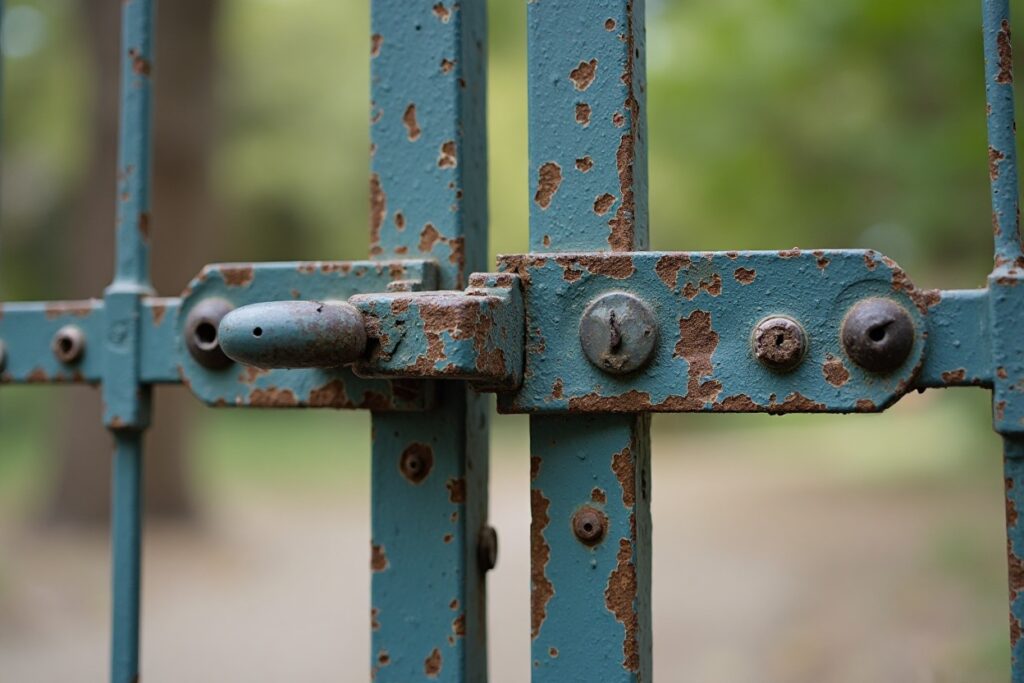
Weld failures tend to show up where the hinge plate attaches to the gate frame. Look for hairline cracks near heat-affected zones on tubular steel. Santa Ana winds cause micro flex across thousands of cycles. The crack starts small and then opens during a particularly strong gust. These cracks appear often on gates built prior to 2005 with thinner-wall tubing. Newer builds in the Calabasas luxury market often use thicker tubing and perform better, but even those need inspection after each severe event.
How photo eyes and edge sensors behave in wind
Gate safety devices are sensitive by design. Photo eye sensors project a beam that must remain aligned. Wind jostles brackets and moves the beam off target. Reflector-style eyes struggle more than dual-unit through-beam sets in gusts. Edge sensors, which detect pressure at the leading edge, can throw intermittent faults if their cable paths flex hard with every gust. In Sherman Oaks and Studio City, where tree-lined driveways shed leaves and twigs into sensor paths, wind multiplies the nuisance. Operators like DoorKing 6300 or Viking F-1 can be tuned to sensible sensitivity, but good hardware sitting on a shaky mount still fails.
Known operator behaviors under Santa Ana loads
LiftMaster LA500 and LA412 units handle wind loads well when supported by a proper latch and positive stops. Their obstruction sensing is protective but can be misread as a failure if the gate lacks a latch. FAAC 415 linear actuators deliver steady push and pull, but hinge friction spikes under wind can trip them. Viking G-5 and BFT IGEA have good control logic and re-try strategies, yet they should not be forced to act as brakes. Ramset and Nice operators show similar patterns. The take-away is not brand selection alone. It is the full system. A stout hinge post, balanced leaves, a midspan latch or magnetic lock, reliable photo eyes, and firm end stops give any operator a fair fight during wind events.
Costs in Los Angeles for repair and wind-hardening
Every property differs, and hillside work can run higher due to access. As a local baseline for swing gate repair Los Angeles projects in 2026, hinge or post repair typically runs $200 to $600 when the work is limited to bearings, pins, or straightening. Swing gate operator repair, including board work, limit adjustments, or gear service, usually lands between $400 and $1,200 depending on brand and parts. When replacement makes more sense, a new automated single swing gate in Los Angeles averages $3,500 to $8,000 installed, while a new automated double swing gate averages $5,500 to $14,000 installed. Adding a magnetic lock with proper power supply and bracketry typically adds $450 to $950. Photo eye replacement sits around $150 to $350 per pair, higher for premium through-beam models.
On properties near the coast, marine-grade hinge hardware raises material cost by 20 to 40 percent but often doubles service life. In hillside zones from Bel Air to Hidden Hills, budget a small premium for anchor depth and concrete. A 36-inch embed with swing gate repair Los in Angeles rebar cage is common for heavy leafs. That work raises up-front cost but reduces annual service calls during Santa Ana season.
Why the same wind creates different problems by neighborhood
Los Angeles is not flat or uniform. Along the US 101 Ventura Freeway corridor, the West San Fernando Valley acts as a funnel. Canoga Park and Woodland Hills entries see long steady wind sets that test hinges for hours. Along the 405 San Diego Freeway and into the Brentwood and Bel Air canyons, wind can be gusty and channeled, producing sudden hits that slam leaves against stops. On Pacific Palisades terraces and Malibu bluffs near Pacific Coast Highway, salt plus wind abrades finishes and pits hinge pins. Sherman Oaks and Studio City lots near Coldwater Canyon experience wind that wraps through tree canopies and sends debris into V-tracks on nearby sliding gates, while swing gates suffer sensor misalignment on vibrating posts. The conditions differ, yet the fix is the same principle. Build the structure to carry the load and train the operator to move, not hold.
Ground loops, free exit sensors, and wind false-triggers
Commercial driveways off De Soto Avenue, Sherman Way, and Victory Boulevard often include ground loop detectors for free exit and safety. Santa Ana winds lift lightweight debris and blow it under leaves. A loop tuned too hot reads motion and opens a gate repeatedly. That is a security risk. Adjusting loop sensitivity and relocating free exit sensors slightly away from the leaf swing path cuts nuisance openings. On residential projects in Encino and Beverly Hills Triangle streets, license plate recognition cameras can also false-trigger when wind-driven shadows and swaying foliage cross detection zones. That is why the best practice is to pair LPR with a time-of-day rule set and a backup credential like a fob reader or keypad.
Shareable local insight: the Canoga Park hinge-post lean pattern
Based on service data logged in and around 91303, approximately 4 in 10 swing gates mounted on steel posts set before 2008 show measurable lean on the hinge side within two Santa Ana seasons after a new operator is added without a midspan latch. The operator pushes and holds against wind because the latch is missing or weak. The wind-induced lever motion then works the post footing loose. Add irrigation that wets soil near the post and the lean accelerates. This cycle is why swing gate repair Los Angeles dispatches often include both operator recalibration and hardware upgrades. Fix the latch and driveway gate motor repair stops first, or the new board will fail again.
Wind-hardening upgrades that work in Los Angeles
There is no single upgrade that solves wind. It is a system approach that matches the housing archetype and exposure. The best upgrades tend to be low profile yet powerful in effect. For homeowners near Warner Center, The Village, and Westfield Topanga, here is what consistently reduces callouts during Santa Ana weeks without adding unnecessary complexity:
- Add a positive mechanical latch or a magnetic lock at the meeting edge of a double swing gate to offload the operator during hold-closed periods. Install thrust-bearing hinges and set the hinge post in deeper concrete with proper rebar when the post shows early lean or the leaf exceeds 10 feet. Swap reflector photo eyes for through-beam sensors on wide driveways where vibration and light scatter trigger false blocks. Program soft-start and soft-stop on operators like LiftMaster LA500 and calibrate obstruction sensitivity to match true hardware friction. For solid-infill gates, open the design with air gaps or switch to an aluminum slat system that reduces sail area while keeping privacy.
What property managers see during extended wind weeks
Across apartment and HOA gates in Reseda, Northridge, and Valley Village 91607, a multi-day wind run reveals patterns. Remote controls still work, but the gate seems to hesitate. Tenants hold the transmitter button longer, and the operator hits its re-try count. Ground loops open the leaf at odd hours when trash and tumbleweeds drift. Telephone entry lines pick up static as wind flexes an aerial drop. These are not mysteries. They are wind-induced faults that respond to small changes. Mount the phone entry with vibration isolators. Tie conduit correctly at both ends. Shield loop leads from movement near the hinge area. Replace worn nylon rollers on any companion garage doors serving the same community to reduce across-system complaints when residents assume all access systems are failing at once.
Why double swing gates deserve synchronized latching in wind
In Beverly Hills, Bel Air, and Pacific Palisades, long double leaves look elegant. During wind they need to behave like one panel at close. A midspan mechanical latch or maglock does that job. Without it, the leaves rattle against each other and the operator arms pulse to re-hold. Over time the bracket holes egg out, and the arms develop play that shows up as mis-synced close. A DoorKing 6300 or Viking F-1 can be tuned to close in a tight sequence, but a hard latch pins the result. This one detail cuts a large share of swing gate repair Los Angeles tickets every fall.
Safety remains non-negotiable during wind
Wind is not a reason to disable safety devices. It is a reason to mount them correctly and wire them cleanly. Photo eyes should sit on rigid brackets with lock nuts. Edge sensors should have strain relief at terminations. Control logic should fail safe and log events so a technician can tell if the issue is obstruction or alignment. On gates serving schools near Pierce College and CSUN, safety review each September is a good practice. Replace damaged eyes, test edges, and verify ground loop detector function before the first Santa Ana event arrives.
Why some operators survive wind abuse longer than others
Hydraulic units tolerate short-term overload due to fluid dynamics and relief valves. That lets a FAAC S418 ride through gusts better than a small DC linear actuator. Yet even hydraulic needs help from stops and latches. DC operators with battery backup handle power blips better, which serves hillside homes along the I-5 and 118 corridors where wind and grid events mix. Big chain-driven units are rare on swing gates but common on large sliding gates. Their heavy gearing is not a fix for a poor hinge post on a swing application. The best operator is the one matched to leaf size, weight, exposure, and the presence of a latch that carries the hold-close load.
How installation details decide long-term outcomes
The install details set the tone for survival. End-stop bolts must contact steel, not paint. That is a small sentence with big consequences. Paint compresses and flakes, and the stop shifts. A 3 mm shift at the stop is chaos for a tight strike at the latch in wind. Conduit entries at operators and intercoms need drip loops and gaskets that hold under vibration. Wire runs should be strain-relieved so wind cannot tug on terminal screws. Concrete pads should not trap standing water at underground boxes. Battery backup enclosures need vents that do not admit dust blown in from Topanga Canyon Boulevard. This is practical field work, and it is why simple punch lists after installation save major repair dollars later.
Hillside driveways and slope math during wind
On a sloped drive, gravity already works against a swing gate. When wind arrives, forces add or subtract depending on swing direction and gust angle. On Los Angeles hillsides from the Hollywood Hills 90046 to Porter Ranch 91326, the clean fix uses positive stops at both ends, a midspan latch, and a careful operator selection with strong slowdown control. Sometimes the correct answer is to change the gate type to a sliding cantilever when setbacks allow. That decision reduces swing conflict with slope and wind at once. Still, many hillside properties value the look of a swing gate. Those can work well when the structure and latch do the holding and the operator does the moving.
Why garage doors get blamed when the gate fails
Wind creates noise across a property. When the gate labors, residents often assume the garage door is also at fault. Phone calls from Sherman Oaks often arrive with both complaints bundled. It is smart to check both. A gate fighting wind can lock vehicles outside, while a garage door with a fatigued torsion spring can lock vehicles inside. Hero-level triage means a team that can address both systems in one visit. That is more than convenience. It restores property rhythm fast on days when Santa Ana winds fill the schedule.
Case snapshots tied to Los Angeles streets
On a cul-de-sac near Vanowen Street in Canoga Park, a double swing iron gate with wood slats lost its strike during a weekend wind event. The operator arms were in good shape, a pair of LiftMaster LA500 units with fresh boards. The real issue was a missing latch and light hinge post lean. Adding a midspan maglock, welding new hinge plates, and resetting the posts in deeper footings stabilized the system. Callbacks during the next wind event dropped to zero.
In Tarzana near Ventura Boulevard, a single swing aluminum slat gate had repeated photo eye block messages whenever winds exceeded 25 mph. The beam reflectors sat on adjustable brackets that vibrated. Replacing them with a through-beam pair on rigid posts ended the nuisance. The operator, a Viking G-5, no longer fought false obstructions and ran cooler.
On a Brentwood side street off Sunset Boulevard, a double leaf with FAAC 415 arms would open, pause, attempt to close, then reverse with heavy wind. The midspan latch sagged one quarter inch due to a worn strike plate. The fix involved a new latch assembly, board reprogram, and a small stop adjustment. Total work time three hours. The gate has held during two subsequent wind runs.
Maintenance rhythm that matches Los Angeles winds
Santa Ana winds often hit in bursts. That sets a maintenance rhythm by season. A smart schedule for swing gate repair Los Angeles properties places hinge lubrication, weld inspection, stop and latch verification, and sensor alignment checks at the start of fall. A second visit after any major wind event confirms no movement occurred. For coastal properties, add a corrosion check and a freshwater rinse plan for hardware after severe wind that lofts salt inland. For hillside properties on the Calabasas and Hidden Hills line, add post-plumb checks each year.
How access control interacts with wind during use spikes
Wind events often coincide with power disturbances and driver impatience. Intercoms like DoorKing 1812, Aiphone IX Series, and 2N IP Verso get heavier use when delivery schedules shift. Vibration-induced intermittency shows up where terminations are weak. Upgrading short patch leads inside pedestals, adding ferrules to stranded conductors, and using dielectric grease on exposed terminals helps those systems ride through wind without user-visible faults. For smart-home integrations like Ring, Nest, and LiftMaster MyQ, the key is to keep the core gate logic independent and integrated through dry contacts or approved modules so a single flaky Wi-Fi hop does not appear as a gate failure during storm traffic.
Permitting and compliance details that matter after a storm
In Los Angeles County, any significant rebuild on a gate or operator should follow current safety standards. That includes photo eyes for entrapment protection and edges where required. On commercial properties along Sherman Way and Olympic Boulevard, expect plan review for new operators, new electrical feeds, and trenching for ground loops. Wind damage does not suspend these requirements. For homeowners in 90210, 90049, or 90402, insurance carriers may also ask for documentation showing UL 325 compliance on operators. A repair that returns a gate to service should not backslide on safety to meet a deadline. Setting it up right once avoids future claims and inspections.
When replacement outperforms repair
There is a point where a leaf is too warped, a hinge post is too compromised, or an operator is so undersized that repair dollars do not buy reliability. Swing gate repair Los Angeles specialists make this call based on structure, not guesswork. If a single leaf longer than 14 feet sits on a 4x4 wood post with a strap hinge, replacing the post and upgrading hardware saves money within a season. If a solid wood cladding catches wind like a wall, moving to spaced slats preserves privacy while cutting force. If a decades-old linear actuator has been rebuilt twice and still trips during wind, a modern unit with proper slowdowns and a true latch gives a clean reset.
Why simple sensor and stop upgrades beat high-horsepower solutions
There is a misconception that a bigger operator solves wind. It does not. In fact, more force increases risk. The correct answer is almost always a better latch, firmer stops, cleaner sensor logic, and a well-set hinge system. A DoorKing 6300 or LiftMaster LA500 with the right support gear will outperform a brute-force unit installed on a loose post with no latch. That is the difference between repairing the symptom and repairing the system.
Quick field checks that catch damage early
On service calls from Chatsworth to Hollywood Hills, technicians look for small signs first. They press each leaf by hand against the latch to feel slop. They sight the hinge post for plumb. They rake grit out of underground boxes. They check that stop bolts actually stop on steel. They try to move the maglock bracket by hand. These checks take minutes and reveal whether the next wind will trigger a call. For homeowners and property managers, the best move during a wind event is to minimize cycle counts. Let the gate stay closed if the property allows. Repeated cycling against a steady wind multiplies wear.
Integration with pedestrian gates and perimeter security
During wind, residents often switch to pedestrian gates to avoid cycling a vehicle gate. Those walk gates need self-closers and latches that do not bind when posts move slightly. On iron frames along Ventura Boulevard storefronts, maglocks should be braced with angle iron to resist wind flex that throws the strike off. If the pedestrian gate shares power or conduits with the driveway gate, vibration hardening applies there as well. Mixed systems behave like one system under wind. A weak point on the walk gate can cause needless service calls on the vehicle gate when occupants assume the larger system failed.
How Santa Ana winds alter service scheduling across Los Angeles
On heavy wind days, response times tighten across the West San Fernando Valley and the Westside. A Canoga Park headquarters with direct access to US 101 and Topanga Canyon Boulevard lets technicians move fast between Woodland Hills, Calabasas, and Malibu when accidents or downed branches choke side streets. For swing gate repair Los Angeles workloads, the expectation is same-day triage and resolution for trapped-in or trapped-out scenarios. Non-urgent upgrades and hardening work often follow in the next 24 to 72 hours when wind settles.
Why documentation helps during insurance and HOA reviews
HOAs in Hidden Hills and Bell Canyon often ask for records after a high-wind week. A report that lists hinge condition, post plumb, latch function, operator amperage draw, board settings, photo eye status, and maglock voltage tells the full story. That document also guides future budgets for hardware upgrades that prevent repeat failures. For single-family estates in Brentwood and Pacific Palisades, similar documentation supports claims if wind-thrown branches dent panels or strike operator covers.
Final checks before the next wind event
A calm week before forecast winds is the right time to confirm basics. Latch engages cleanly. Stops hit steel. Hinges hold grease. Photo eyes align. Maglock releases on command and holds at rated force. Operator limits are learned and slowdowns are smooth. If the gate passes those checks, Santa Ana winds still press hard, but the system rides through without excessive strain. If any check fails, call before the wind arrives. Fast attention beats emergency response every time.
Service and scheduling for swing gate repair Los Angeles
Homeowners and property managers across Los Angeles County who need swing gate repair Los Angeles during or after Santa Ana winds can book direct with Hero Tec. The team operates 24 hours, 7 days, from the Canoga Park headquarters at 21050 Kittridge St #656, 91303, with primary coverage across the West San Fernando Valley, the broader Valley, and the Westside. As a California licensed contractor, CSLB License #1098568, the company services LiftMaster, FAAC, DoorKing, Viking, Linear, BFT, Came, Nice, and Ramset operators, and completes structural hinge and post work, latch and magnetic lock upgrades, photo eye and edge sensor replacements, and access control repairs. Same-day dispatch is standard for trapped-vehicle scenarios along US 101, I-405, and 118 corridors. Call (747) 777-4667 for a free estimate and a transparent written quote for swing gate repair Los Angeles work. The technician will diagnose, present options, and complete the repair or wind-hardening upgrade that restores reliable operation.
What to expect on the first visit
The first visit includes inspection of hinge posts, hinges, welds, latches, stops, maglocks, photo eyes, edge sensors, operator configuration, and board readings. The technician confirms power quality, checks conduit strain reliefs, and evaluates wind exposure and leaf design. Most swing gate repair Los Angeles issues resolve on the spot with hinge service, stop or latch adjustments, sensor re-alignment, or board settings. When parts are required, the truck stock covers common operator boards and photo eyes for LiftMaster, DoorKing, Viking, FAAC, Linear, and BFT. Structural work such as post resets or new latch installations can be scheduled within one to three days, with emergency bracing provided if wind continues.
Upgrades that pair well with Santa Ana season
- Maglock addition on double swings with long leaves where hold-closed stress is high. Thrust-bearing hinge upgrade on gates showing early squeak or wear at the pins. Through-beam photo eyes on wide driveways with vibration or light-scatter issues. Operator upgrade to a unit with refined slowdown control when leaves are large. Aluminum slat conversion or picket-spacing increase to reduce sail area without losing privacy.
These upgrades are offered as options after repair, with written pricing and manufacturer-backed warranties. The goal is simple. Match Los Angeles wind realities with a gate system that holds alignment, closes tight, and cycles clean under gusts.
For any property along Ventura Boulevard, Mulholland Drive, Topanga Canyon Boulevard, Sunset Boulevard, or Pacific Coast Highway, swing gate repair Los Angeles service is a call away. Hero Tec schedules on the same line for HOAs in 91302 and 91307, luxury residences in 90210 and 90077, coastal homes in 90402 and 90265, and Valley homes in 91364, 91436, and 91604. Swing gates can ride through Santa Ana winds without drama. It takes the right structure, the right latch, the right sensors, and the right operator settings. Book swing gate repair Los Angeles service and set the system straight before the next wind advisory.
Hero tec - Gate Repair And Installation provides expert gate repair and installation services across Canoga Park, CA and the greater Southern California area. Our technicians handle all types of automatic and manual gate systems, including sliding, swing, and driveway gates. We specialize in fast, affordable repairs and high-quality new gate and fence installations for homes and businesses. Every project is completed with attention to detail, clear communication, and on-time service. Whether you need a simple gate adjustment or a full custom installation, Hero tec delivers reliable results built to last.
Hero tec - Gate Repair And Installation
21050 Kittridge St #656
Canoga Park,
CA
91303,
USA
Phone: (747) 777-4667
Website: https://herotecinc.com
Social Media: Yelp, View on Google Maps